The purpose of this website is to infrom people about monkey species on how they live,where they live,and they look.
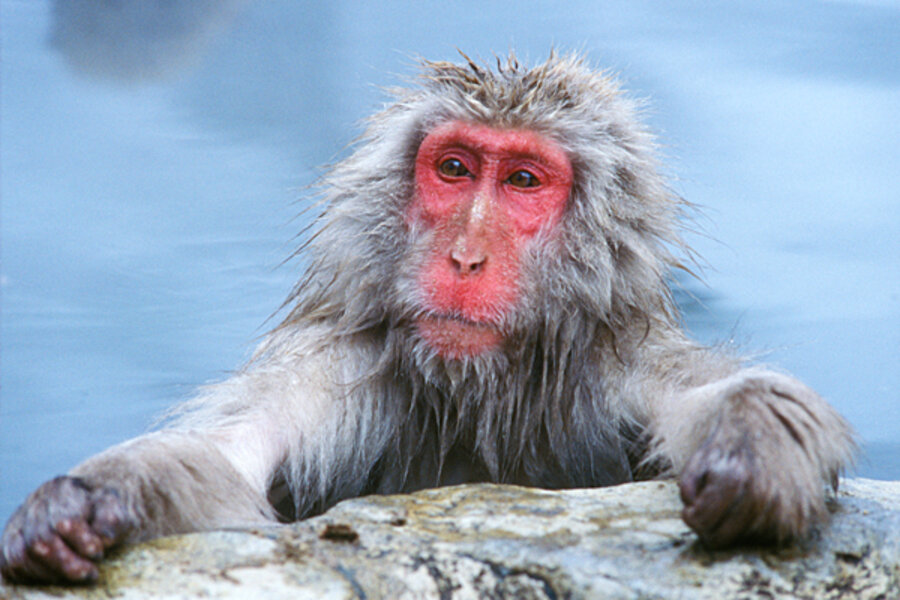
Japanese macaques, more descriptively known as Japanese snow macaques and simply referred to as snow monkeys, inhabit three of Japan’s four main islands: Honshu, Shikoku, and Kyushu (they do not occur on Hokkaido, the fourth and northernmost island). These iconic primates also inhabit the smaller islands of Awaji, Shodo, Yakushima, Kinkazan, and Kojim, as well as other smaller islands within Japan’s different prefectures. A population who once resided on the island of Tanegashima (or “Tane Island”) within Kagoshima Prefecture is now extinct there, according to the International Union for the Conservation of Nature (IUCN).These Monkeys mostly live in cold temperatures.A pinkish-red to ruby-colored face, the result of visible blood vessels (capillaries) just beneath the skin, gives Japanese macaques their arresting, human-like countenance. Soulful eyes peer out from beneath a distinct brow ridge. Eye color varies among individuals, and, on occasion, is asymmetric with each eye being a different color. Sex appears to have no bearing on eye color, but significant difference occurs depending on age. Most infants have blue eyes, but by the time they reach juvenile stage, eye color usually (but not always) changes to varying shades of orange, copper, yellow, or hazel. Eye color is thought to be inherited from parents.
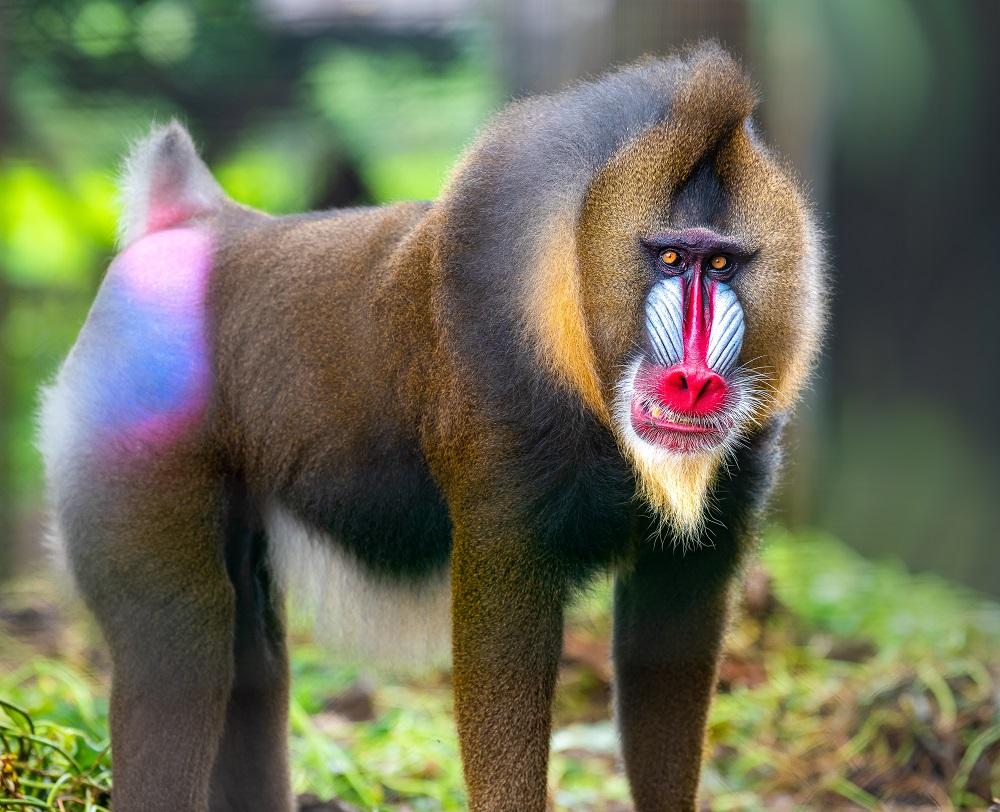
Mandrills mostly reside in the tropical rainforests of equatorial Africa. The largest population lives in Gabon, where they inhabit dense, lowland jungles that range from sea level to steep hilly terrain. Smaller groups inhabit the rain forests, upland slopes, and bush of Cameroon, Equatorial Guinea, and the Democratic Republic of Congo. Despite their preference for thick woodland, mandrills spend their days on the ground and sometimes travel across savannas. The Sanaga, Ogooué, and Ivindo rivers bind their distribution to the north and east.Pairing olive-gray coats, blue noses adorned with red stripes, golden beards, and bright red lips with their remarkable stature and weight, mandrills distinguish themselves in both size and shading. Their unique rumps bear vibrant red, blue, or purple pads to support sitting, enhance visibility while moving through vegetation, and signal sexual interest and capacity to other mandrills. Exceptionally long arms and canines help them forage widely and omnivorously in the food-ridden forests. They also have long cheek pouches down the sides of their necks. When full, the pouches can hold close to a full stomach load of food.
Central chimpanzees are found in the tropical and swamp forests of Central Africa, across Angola, Cameroon, Central African Republic, Congo, Democratic Republic of Congo (DRC), Equatorial Guinea, and Gabon (where they have been studied the most). The Sanaga River in Cameroon and the Congo River in the DRC act as natural barriers that prevent their movement to the north and south of their range.These chimps typically live in lowland forests and prefer mixed tree species. However, due to extensive habitat destruction and change, they have adapted to foraging and nesting in forests dominated by single-tree species.All chimpanzees are tailless and have standard morphological features such as long dark fur, hairless faces with deep-set brown eyes, and their young are born with pale faces and a white tail tuft at the base of their spine, which darkens as they age. Central chimpanzees are larger and have significantly longer arms than other subspecies. They also have longer fingers and short thumbs, which indicate that Central chimps may be more suited to climbing and traveling through trees. Their faces also appear more prominent, with less hair than the other subspecies.