A lot of people are unaware about the dangers of tornadoes, and how badly they can affect people. People also don’t know a lot of information about tornadoes and the types of tornadoes there are and the type of damage they can create.
A Supercell Tornado is a type of tornado that is the most common, and often the most dangerous. How a supercell tornado is formed is from a rotating updraft which is where columns of air can begin to rotate from wind shear – when winds at two different levels above the ground blow at different speeds or in different directions and then eventually a tornado is formed. https://www.nssl.noaa.gov/education
A Wedge Tornado is a slang for describing a large and wide tornado, with its width being larger than its length. Often these types of tornadoes are seen as dangerous and extreme with winds that can exceed up to 300mph, which causes uprooting of trees, damaging of housing, and tossing vehicles. https://forecast.weather.gov + Google
A Multi-Vortex Tornado is a type of tornado that contains multiple smaller rapidly moving tornadoes,doing double even triple the damage than one regular tornado can do. These multiple tornadoes are called subvortexes where they suction coming in groups of 2 or 5 at once, but these small Subvortices usually do not last over a minute, yet they still deal lots of damage with Subvortices being able to add over 100mph to the ground-relative winds.https://www.spc.noaa.gov/ + Google
A Satellite Tornado is a supercellular tornadic vortex, where a bigger wider parent tornado is accompanied by a primary tornado, but unlike the multi-vortex tornado with its small subvortexes only lasting up to a minute, a satellite tornado has only 1 subvortex that is long-lasting. The long lasting tornado is physically separated from the main tornado, but is in the same rotational sense as the parent. The long tracking tornado is primary ranked EF3s causing double the damage with the parent tornado, to which the tracking tornado adds 35km, and 800m in width to the parent tornado. https://grokipedia.com/ + Google
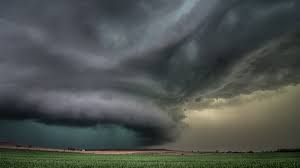
https://eos.org/Credit: Lane Pearman, CC-BY-2.0