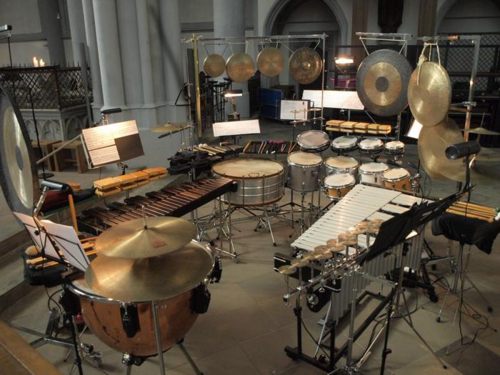
Percussion instruments are instruments that are played by hitting or tapping a surface rhythmically to produce sound. We can classify percussion instruments under three categories: idiophones, membranophones, or unpitched percussion. Idiophones are instruments that make sound from the vibration of the instrument itself. These instruments include the marimba, xylophone, glockenspiel, etc. Membranophones are instruments that produce sound by hitting any widly stretched membrane. Some membranophones are snare drums, timpanis, bass drums, etc. Unpitched percussion instruments are instruments that, when played, do not produce a pitch. These instruments include the tamourine, shaker, maracas, most cymbals, etc.
The drum is regarded as the oldest musical instrument on Earth. Although the oldest drums found by archaeologists are 8-9 thousand years old, people began inventing and using percussion instruments much, much earlier. The oldest drums found by archaeologists were discovered in Mesopotamia, which is not surprising, because that is where, in 4000 BCE, the oldest urban civilization emerged – Sumer, from which we all descended. In the third century BCE, the Romans invaded Africa, where they encountered the highly-developed practice of playing percussion instruments. Surprised at the effect produced, the practical Romans applied these instruments first and foremost to military affairs: to transmit military signals, intimidate the enemy and raise troop morale.